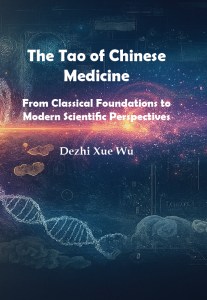
 The Tao of Chinese Medicine: From Classical Foundations to Modern Scientific Perspectives
For more than two thousand years, Chinese medicine has sought to answer a question that remains central to medicine today: What enables life to maintain health? Long before modern physiology described homeostasis, adaptation, and systems regulation, Chinese physicians had developed a sophisticated framework for understanding how the human body preserves balance, responds to change, and recovers from illness.
The Tao of Chinese Medicine offers a fresh and intellectually rigorous interpretation of Traditional Chinese Medicine (TCM), presenting it not as mysticism or cultural tradition, but as a coherent medical philosophy grounded in careful observation, clinical experience, and a systemic understanding of life. Drawing together classical texts, historical development, modern scientific research, and decades of clinical practice, the book re-examines Chinese medicine through the lens of contemporary knowledge while remaining faithful to its original principles.
Rather than treating TCM as a collection of isolated therapies, the author reveals its underlying logic as an integrated system for understanding health, disease, and human adaptation. Concepts such as Yin–Yang, the Five Phases, Qi, Blood, the Zang–Fu organs, and the meridian network are presented as functional models that describe regulation, interaction, and dynamic balance within living systems—not as metaphysical abstractions or symbolic beliefs.
From this perspective, acupuncture, herbal medicine, tuina, dietetics, emotional regulation, and Yang Sheng share a common purpose: they do not simply fight disease but seek to restore the body’s intrinsic capacity for self-regulation. Disease is understood less as an external enemy than as the gradual disruption of physiological order. Healing, therefore, is the process of re-establishing the conditions in which life can recover its own balance and resilience.
The book also builds a dialogue between Chinese medicine and modern science. Drawing on advances in neuroscience, fascia research, mechanotransduction, neurophysiology, chronobiology, and systems biology, it explores how contemporary scientific discoveries can illuminate the mechanisms underlying acupuncture, functional disorders, and the body’s remarkable capacity for adaptation. Rather than forcing ancient theory into modern terminology, the discussion allows each tradition to enrich the other while respecting their distinct perspectives.
At a time when chronic disease, aging, stress-related disorders, and functional illnesses have become defining challenges of global healthcare, the classical principle of Zhi Wei Bing—preventing illness before it arises—offers renewed relevance. Through discussions of circadian rhythms, lifestyle, emotional balance, and preventive care, the book demonstrates that Chinese medicine is fundamentally concerned not only with treating disease, but with preserving the conditions that allow healthy life to flourish.
Rather than positioning Chinese medicine as an alternative to modern biomedicine, The Tao of Chinese Medicine argues that the two traditions address different, yet complementary, dimensions of health. Modern medicine has transformed our understanding of structural pathology and acute disease; Chinese medicine offers profound insights into regulation, adaptation, resilience, and the dynamic processes that sustain living systems. Together, they provide a broader and more complete understanding of medicine than either can achieve alone.
Written for physicians, researchers, students, and readers interested in the future of healthcare, The Tao of Chinese Medicine invites a reconsideration of what medicine truly is—not merely the treatment of disease, but the science and art of understanding life itself.